
"Martinique coffee flavor"
1000 article(s) found

Introduction of Jamaican boutique Blue Mountain Coffee Flavor and Taste
In the mid-1970s, the Governor of Jamaica, Sir Nicholas Lloyd (Nicholas Lawes), imported Arabica seeds from Martinique and began to plant them in St. Andrew. To this day, St. Andrews is still one of the three major producing areas of Jamaican Blue Mountain Coffee, with the other two producing areas: Portland (Por).

The coffee producing area of Venezuela.
Venezuela introduced coffee trees from Martinique as early as 1730, but coffee production was almost abandoned at the height of the oil industry. Recently, coffee plantations have begun to recover, with original Tipica and bourbon coffee trees and new plantations laying the foundation for coffee exports.
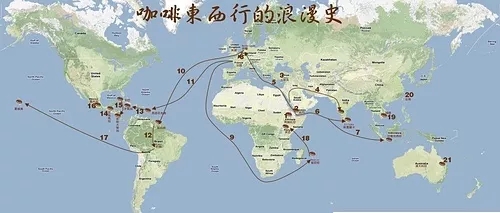
After reading the spread history of coffee, feel the romance of coffee traveling around the world.
Professional coffee knowledge exchange more coffee bean information Please pay attention to the coffee workshop (Wechat official account cafe_style) Coffee will become a world drink, is accompanied by the great navigation era of the 17th and 19th century, after three hundred years coffee beans, coffee seedlings planted all over the world, including the Netherlands, France brought coffee beans to colonization, newly developed regions of the Caribbean, Central and South America, the 19th century

Coffee from Mexico (Mexico) Oaxaca and Chiapas Mexican coffee beans can be said to be flavor
In 1721, French naval officer Gabriel Mathieu de Clieu went through difficulties and obstacles to bring the first coffee sapling from Africa to the Latin American island of Martinique, which was the origin of coffee cultivation in Latin America. Because France was under the Bourbon dynasty, there was another time for Arabica coffee grown in Latin America.
Global Coffee producing area Venezuela Coffee Market
Venezuela introduced coffee trees from Martinique as early as 1730, but coffee production was almost abandoned at the height of the oil industry. Recently, coffee plantations have begun to recover, with original Tipica and bourbon coffee trees and new plantations laying the foundation for coffee exports.

Introduction to the description Price of the Flavor of Dominica Coffee varieties
The earliest coffee in Dominica was introduced from Martinique (the overseas province of France), dating back to the early 18th century. Dominica is an island country with a tropical climate. The temperature changes little throughout the year. Except for the lower temperature in the Central Cordillera Mountains, which can reach less than 0 ℃ in winter, the annual average temperature in other areas is between 25 and 30 ℃, which is affected by the mountain topography.

Blue Mountain Coffee Bean Flavor Description Taste Manor Area Processing Variety Introduction
In 1717 King Louis XV of France ordered coffee to be grown in Jamaica, and in the middle of the 20th century, Sir Nicholas Lawes, governor of Jamaica, imported Arabica seeds from Martinique and began planting them in St. Andrew. To this day, St. Andrew

Flavor and taste of Blue Mountain Coffee Manor in Jamaica
In the mid-1970s, the Governor of Jamaica, Sir Nicholas Lloyd (Nicholas Lawes), imported Arabica seeds from Martinique and began to plant them in St. Andrew. To this day, St. Andrews is still one of the three major producing areas of Jamaican Blue Mountain Coffee, with the other two producing areas: Portland (Por).

Introduction to the flavor and taste of Santo Domingo's boutique coffee manor
In the early 18th century, coffee was introduced to Domiga from Martinique, and fine coffee was produced in the north represented by Hibao and in the south, including Okayabani Santo Domingo. Among them, the coffee produced by Santo Domingo and Barney, which is almost synonymous with domiga coffee, is a world-famous high-quality coffee. Santo Domingo coffee, which is characterized by freshness and elegance,

Basic knowledge of boutique coffee Venezuelan coffee
Venezuela introduced coffee trees from Martinique as early as 1730, but coffee production was almost abandoned at the height of the oil industry. Recently, coffee plantations have begun to recover, with original Tipica and bourbon coffee trees and new plantations laying the foundation for coffee exports.

Introduction to the flavor of Dominica coffee beans with rich taste and smooth taste
Miniga's earliest coffee was introduced from Martinique (the overseas province of France), dating back to the early 18th century. Dominica is an island country with a tropical climate. The temperature changes little throughout the year. Except for the lower temperature in the Central Cordillera Mountains, which can reach less than 0 ℃ in winter, the annual average temperature in other areas is between 25 and 30 ℃, which is affected by the mountain topography.

Venezuela's coffee producing region Venezuela's coffee market
Coffee trees were imported from Martinique as early as 1730, but coffee production was almost abandoned during the heyday of the oil industry. Coffee plantations have recently begun to revive, with the old Tipica and Bourbon trees and new plantations laying the groundwork for coffee exports.

What are the characteristics of Ironpika Coffee? deep roasting of ancient coffee varieties
Professional coffee knowledge exchange more coffee bean information please follow the coffee workshop (Wechat official account cafe_style) Tibica trees have a longer life originally grown in Martinique Island, now mainly produced in Yamaiga, Kona region of Hawaii, Papua New Guinea and Timor-Leste. In addition, parts of Colombia and Cuba, Dominica and other places

Coffee bean producing area Puerto Rico coffee beans in the Caribbean
Well-known representative coffee: Yauco) it is generally believed that the original coffee tree species of Puerto Rico was brought to Martinique Island (French West Indies in the Caribbean) by the French in 1723 and was quickly introduced to Puerto Rico in 1736. Due to the mountainous environment and suitable climate and soil, it soon became a major export to Europe. Among them
Coffee Bean producing area-Caribbean-Puerto Rico (Puerto Rico)
Well-known representative coffee: Yauco) it is generally believed that the original coffee tree species of Puerto Rico was brought to Martinique Island (French West Indies in the Caribbean) by the French in 1723 and was quickly introduced to Puerto Rico in 1736. Due to the mountainous environment and suitable climate and soil, it soon became a major export to Europe. Among them

History and culture of blue mountain coffee is the flavor characteristic of authentic blue mountain coffee bitter
In 1717, King Louis XV of France ordered the cultivation of coffee in Jamaica. In the middle of the 20th century, the Governor of Jamaica, Sir Nicholas Lloyd (NicholasLawes), imported Elaraby from Martinique.

The famous producing area of Peruvian coffee, Peruvian boutique coffee and South American coffee.
In 1721, French naval officer Gabriel Mathieu de Clieu went through difficulties and obstacles to bring the first coffee sapling from Africa to the Latin American island of Martinique, which was the origin of coffee cultivation in Latin America. Because France was under the Bourbon dynasty, there was another time for Arabica coffee grown in Latin America.

Introduction of Santo Domingo Coffee Flavor Manor
In the early 18th century, coffee was introduced to Domiga from Martinique, and fine coffee was produced in the north represented by Hibao and in the south, including Okayabani Santo Domingo. Among them, the coffee produced by Santo Domingo and Barney, which is almost synonymous with domiga coffee, is a world-famous high-quality coffee. Santo Domingo coffee, which is characterized by freshness and elegance,

Puerto Rican coffee producing area Puerto Rico coffee bean flavor
Coffee trees were introduced to Puerto Rico (PuertoRico) from Martinique in 736. Most of the early coffee was grown by immigrants from Corsica. Coffee farms were once prosperous in the 19th century, but the rise of sugarcane and crop farming and the impact of hurricanes and wars made the coffee industry lag behind and is now recovering. The origin of coffee in Puerto Rico: Puerto Rico is the most

Trade oil for coffee? Flavor and taste characteristics of Venezuelan coffee.
More information on coffee beans Please follow the Coffee Workshop (official Wechat account cafe_style) Coffee trees were introduced from Martinique in Venezuela in 1730, but at the height of the oil industry, coffee production was almost abandoned. Fortunately, coffee cultivation has begun to recover recently, and the original Typica and Borubon coffee plantations have laid the foundation for coffee exports.